Hotels and hospitality
Hotel temp staff for seasonal and absence cover in Copenhagen
A hotel's staffing requirement does not move in a straight line with occupied rooms. Arrivals, departures, groups, room types, breakfast demand, public spaces, unplanned absence and scheduled leave create pressure in different departments at different moments. “Extra hotel staff” is therefore too broad for an agency to match responsibly. A useful request identifies the department, pressure point and operating period that actually needs cover.
 Illustrative image
Decisions in the hotel's cover plan
- Map demand by department, date, shift and expected operating pressure.
- Define roles, local hosts and the induction owned by each department.
- Agree handovers, feedback and continuity without promising a particular person.
A stronger cover plan connects demand with the workflow the property intends to protect. This guide gives Copenhagen and Zealand hotels practical planning guidance for housekeeping, breakfast, wait staff and related hospitality operations within Copenhagen Staff's business scope. Adapt it to the property's procedures, working environment and current supplier agreement.
Map demand by department
Begin with the operating picture available to the local team. Identify when rooms need release, when guests arrive, when breakfast or other outlets face pressure, and which public areas require ongoing attention. A top-line occupancy figure does not reveal where the work will occur.
Ask department leads about bottlenecks and handovers. Housekeeping may depend on room access and prompt reporting of maintenance issues. Breakfast service may depend on replenishment, clearing and communication with the kitchen. Temporary capacity is easier to place when the starting point and priority are agreed before arrival.
Record both the expected plan and the conditions that may change it. Early arrivals, late departures or a revised group plan can move priorities. Identify who has authority to make that call so a temporary worker does not receive competing directions from reception, housekeeping and food and beverage.
For international hotel groups, keep the local operating plan distinct from the head-office forecast. The person receiving the worker in Copenhagen needs the current shift picture, even when procurement takes place elsewhere.
Separate seasonal planning from absence response
Seasonal demand can be prepared with reusable roles, request windows, named hosts and updated inductions. Absence cover needs a compact response route: who assesses the gap, who sends the brief, and what the hotel does if the desired profile cannot be confirmed? The plans may share documents without becoming identical.
Scheduled leave creates an opportunity for the role holder or department lead to surface hidden knowledge: task sequence, routine interfaces and moments where a manager normally intervenes. For sickness absence, avoid personal details and communicate only the operational gap.
Maintain an internal minimum plan. An agency can assess its live availability, but the hotel still owns service priorities. Decide which work is protected and which can move if full cover is not available.
Create roles an agency can match
“Hotel worker” can refer to very different assignments. State the department, tasks, working language, guest contact, local systems, physical context, clothing and authority. Separate prerequisites from what the property will teach on arrival.
A housekeeping role may be limited to named room types or public areas with a defined quality check. A breakfast role may focus on buffet, tables or dish support under a local lead. A waiter role may own a section and use a designated route for menu and allergen questions. Do not combine every possible activity into one flexible title when the worker will only be inducted into part of it.
For English-language roles, still describe Danish terms, instructions or guest interactions that arise locally. A coordinator can assess language fit more accurately when communication is linked to tasks.
Hotel cover plan
A simple model for seasonal and absence cover
This is planning guidance and should be adapted to the hotel's departments and leadership structure.
- Map demandOccupancy, arrivals, departures, groups and local conditions.
- Define rolesDepartment, tasks, system access, language and supervision.
- Build continuityRebook good matches and refresh their local induction.
- ReviewQuality, exceptions, next shift and changes to demand.
Standardise the welcome without making it generic
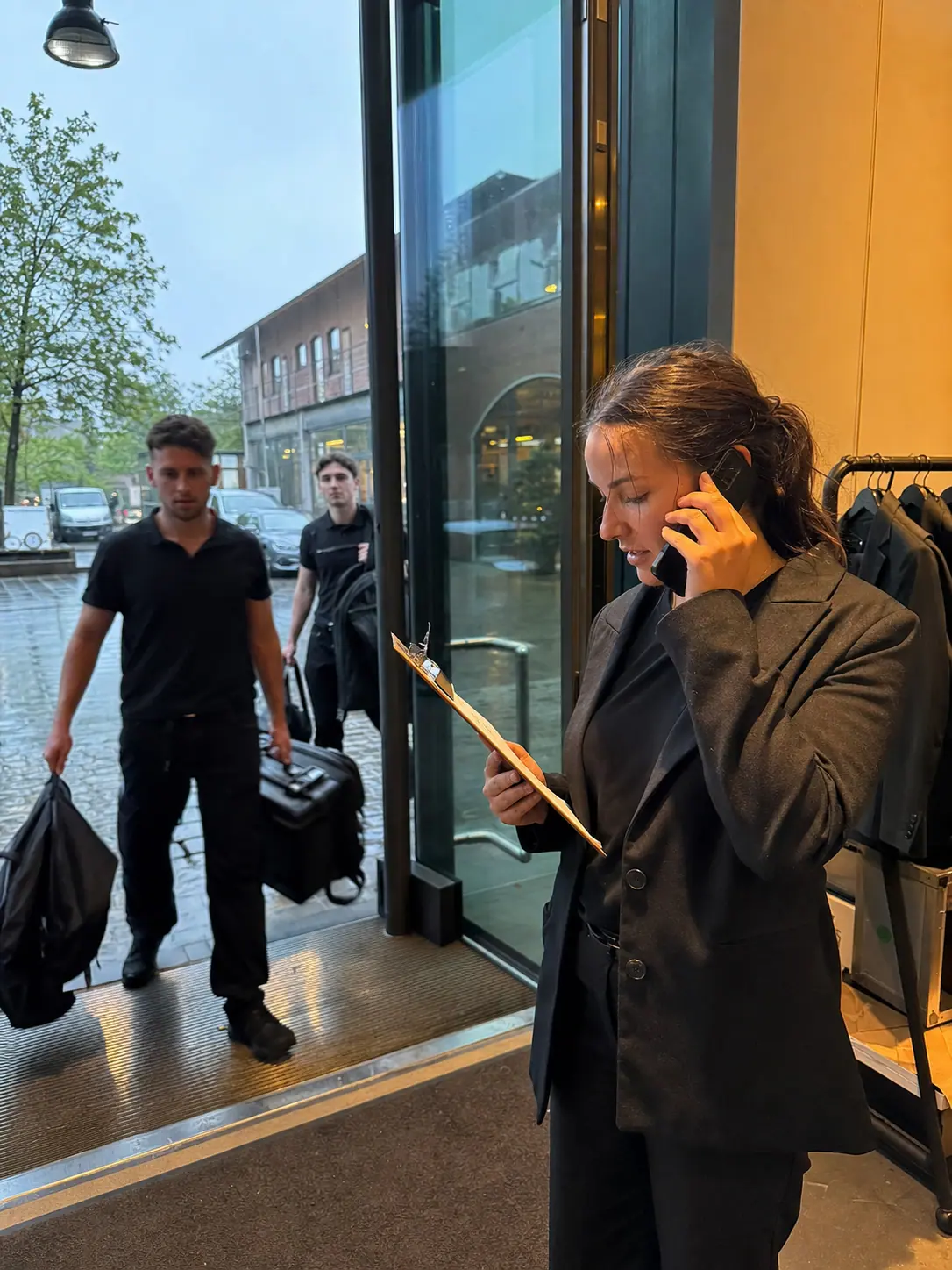
A reusable hotel induction should start at the correct staff entrance and finish at the first task. It can cover changing arrangements, key or access process, relevant emergency information, local workflow, named contact, breaks, time approval and exception reporting. Give only the system and area access that the role requires and the property authorises.
Nominate a host in the starting department. A central coordinator may make the booking, but a local lead must demonstrate the task and check understanding. Where a worker moves between departments, name the transition and the next responsible person in the brief.
Check in after the start. Confirm that access, tools, priority and role match the pre-shift information, particularly if the room or service plan changed after the request was sent.
Build continuity without promising one person
For repeat demand, the hotel and agency can retain accurate records of which profiles were inducted into which areas and what work-related feedback matters. This pool approach can make later matching better informed. It should not be presented as a guarantee that a particular person is always available.
Keep induction content current. A successful previous match can still have a poor start when the entrance, system, standard or local manager has changed. Include a short update in the brief that is actually sent and remove instructions that no longer apply.
Use observable feedback. Was the role clear? Did the host arrive? Was the priority achievable? Did exceptions reach the right lead? Include gaps in the hotel's own process instead of rating only the individual worker.
Make cross-department handovers explicit
Hotel work becomes vulnerable when one team assumes another has taken ownership. State who owns an item until the receiving function accepts it. A room defect may pass from housekeeping to maintenance or reception. A breakfast change may need to travel between kitchen and front of house. The temporary worker needs the route; they do not need to perform every function personally.
Use the property's established system or agreed channel. Do not leave material information in a private message that the next shift cannot access. If a temporary worker has no system access, name the employee who records the information.
 Illustrative image
COPYABLE WORKING TOOL
Copy the hotel cover checklist
- Department and demand picture
- Role, tasks and prerequisites
- Named host and access route
- First priority and change authority
- Local induction and check-in
- Cross-department handovers
- Close and updated brief
Frequently asked questions
- Can a hotel use the same plan for seasonal and sickness cover?
- The plans can share role briefs and inductions, but their decision routes differ. Seasonal demand can be prepared; unexpected absence needs compact prioritisation and rapid clarification.
- Can we request the same hotel temp every time?
- You can retain useful records of good matches and earlier induction, but the individual's availability must be confirmed for each shift. The plan should also work with another suitable profile.
- Who should receive the hotel temp on site?
- Name a host in the department where work begins. That person should show access, tasks, priorities, workflows and the exception route, then check understanding.
Sources and methodology
This guide is editorial planning guidance built by breaking the staffing requirement into roles, tasks, workflows, handovers and decision points.
No external factual source was required for this planning method, so no external sources are listed.