Warehouse and logistics
Warehouse temp onboarding and safety in Copenhagen
A warehouse temp may have experience in picking, packing, goods-in or internal logistics and still be completely new to the risks and workflow at your Copenhagen site. Traffic routes, racking, scanners, doors, aids, equipment, stop criteria and reporting are local. Production pressure should never be used to bypass induction. A short site-specific induction must make responsibility, instruction and the stop route clear before work begins.
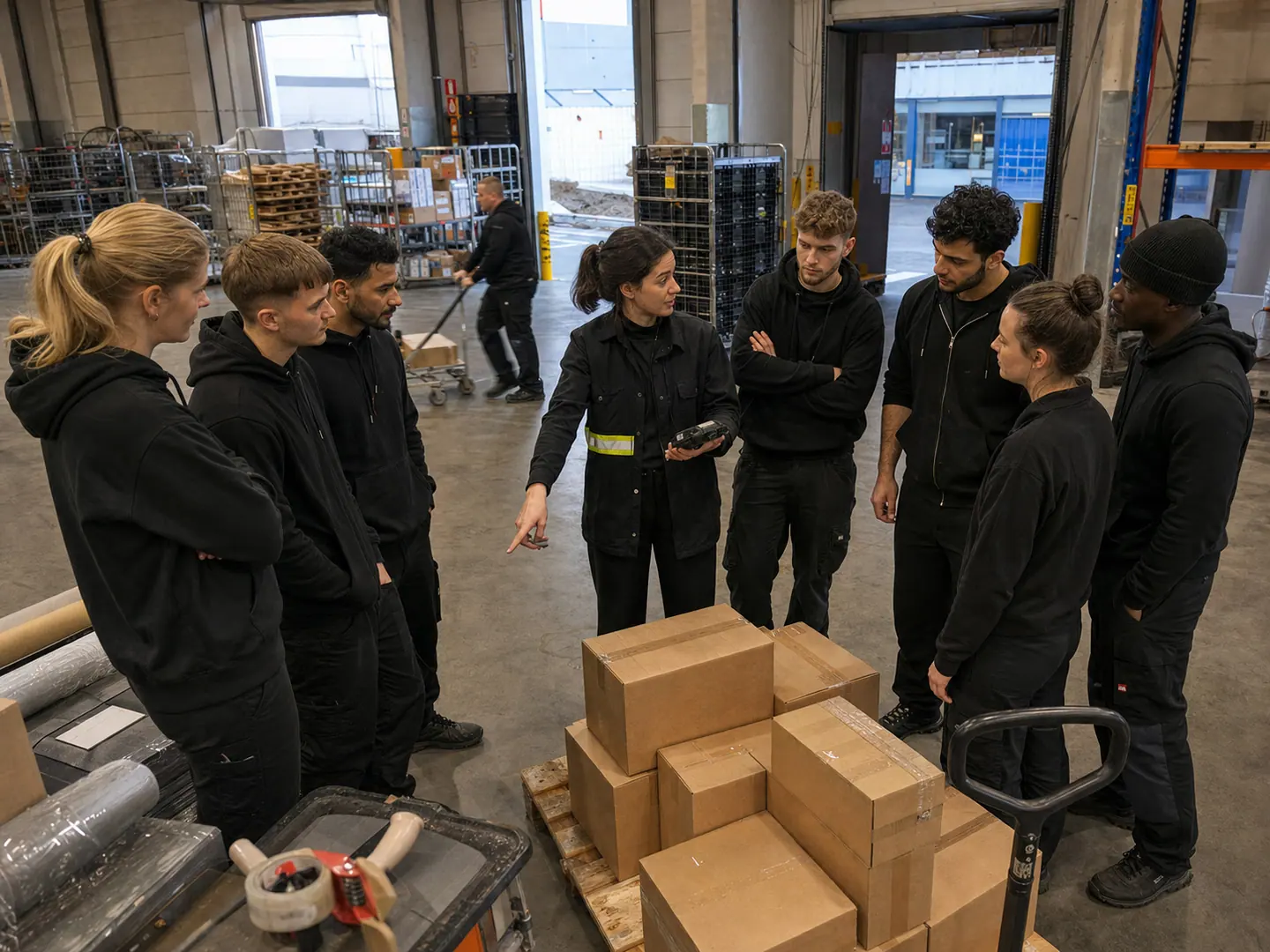 Illustrative image
Decisions before warehouse work begins
- Define tasks, areas, equipment, role boundaries and necessary prerequisites.
- Plan local instruction for traffic routes, risks, aids and procedures.
- Choose a controlled first task and the stop, contact and handover routes.
This guide gives businesses in Copenhagen and Zealand practical planning guidance for the handoff between buyer, agency, site lead and temporary worker. It does not replace the workplace assessment, risk assessment, instruction, statutory training requirements or qualified advice relevant to the operation.
Define the assignment before matching
Describe the product flow and the worker's position in it. Will the person pick, pack, check, receive, sort returns, prepare dispatch or support general warehouse order? Identify the areas, systems and aids used by the task and those outside the role.
Separate manual activity from equipment or functions that depend on specific prerequisites. Name requirements accurately and agree which evidence the agency checks and which the site verifies at arrival. “Forklift experience” is not a safe basis for allocating a particular machine or activity.
Describe working language through the actual environment. Which language is used for induction, signs, scanner text, radio, team communication and emergency procedure? If understanding will be checked through demonstration or teach-back, include that in the arrival plan.
For international logistics companies, ensure a central English job profile does not obscure local Danish site terminology. Attach both where necessary and give the receiving supervisor the same accepted version.
Connect the request to local working-environment management
The Danish Working Environment Authority describes the employer's responsibility for systematic working-environment management, including necessary training and instruction and effective supervision. The site therefore needs an onboarding process shaped by its actual work and risks. An agency can distribute pre-shift information, but it cannot demonstrate a route or method that exists only at the warehouse.
Link onboarding to the relevant local risk assessment. Select conditions the temporary worker will encounter in the accepted role: pedestrian and vehicle interaction, doors and loading areas, falling or unstable goods, manual handling, machinery, noise, temperature, chemical or biological exposure, lone work, or other site-specific risks. The client's assessment, not a generic internet checklist, determines the content.
Name who provides instruction, how understanding is checked and who supervises the start. If an appropriate lead is not available at arrival, resolve that before independent work begins.
Keep qualification checks separate from site instruction
The authority's overview of occupational training requirements explains that certain work requires specific training and includes forklift work among its examples. Use current official information and suitable advice to determine what applies to the exact task.
Evidence of training does not prove familiarity with your machine, load, traffic layout or procedure. Maintain two visible controls: the prerequisite checked for matching and the local training and instruction completed before work. Record each under the client's approved process.
If evidence is missing, unclear or does not correspond to the assignment, do not ask the worker to “have a quick go”. Stop, contact the responsible site lead and agency, and allocate only work within a verified role or choose another solution.
Safe start
Before a temporary worker works independently
The employer must ensure training, instruction and supervision; adapt the sequence to your risk assessment.
- VerifyIdentity, role, required qualifications and agreed tasks.
- IntroduceTraffic routes, emergencies, equipment, PPE and site contact.
- DemonstrateLocal method, stop criteria, quality and exception route.
- Follow upObserve the start, correct misunderstandings and record instruction.
Walk the real route from entry to task
Onboarding begins before the performance target. Show correct entrance, sign-in, changing and break arrangements, first-aid and emergency information, meeting point and contact. Provide agreed work clothing or personal protective equipment and check its use under local instruction.
Walk the route the worker will use. Point out separation between pedestrians and moving vehicles, crossings, restricted views, doors, loading edges, controlled areas and approved places for goods. Explain local signals and stop rules. Signs support the explanation but do not replace it.
Demonstrate the work from input to accepted output. Cover the scanner or record, quality check, handling of an exception, and where a product goes when it cannot continue through the flow. Ask the worker to perform or explain a relevant example under supervision.
Choose a controlled first task
The opening task should sit inside the briefed role and allow the lead to observe understanding. State the starting point, acceptance criteria, the place of pace after safety and quality, and when work stops. Give one reachable person for questions.
Do not compare a newcomer with a permanent team's unspoken routine. If a method exists mainly through peer knowledge, make it explicit. Once the worker demonstrates the correct process, the lead can decide the next task and appropriate supervision.
When priorities change, repeat the instruction affected by the change. Moving from packing to goods-in or between areas can introduce different traffic, aids and quality decisions even when the job title remains “warehouse operative”.
Make stopping and exception reporting normal
The worker should know the site's stop conditions: unclear instruction, damaged equipment, blocked route, unstable load, mismatch between system and product, missing protective equipment or work outside the accepted role. Tailor those examples to the actual assessment.
Provide one visible exception route. The site lead owns the immediate operating decision. The agency is contacted when the matter concerns matching, the agreed role, working time or supplier follow-up. Do not force the worker to choose between silence and an unknown central contact.
Record incidents and near misses through the client's existing process. A separate informal “temp log” can prevent important information from reaching the working-environment organisation or the next shift.
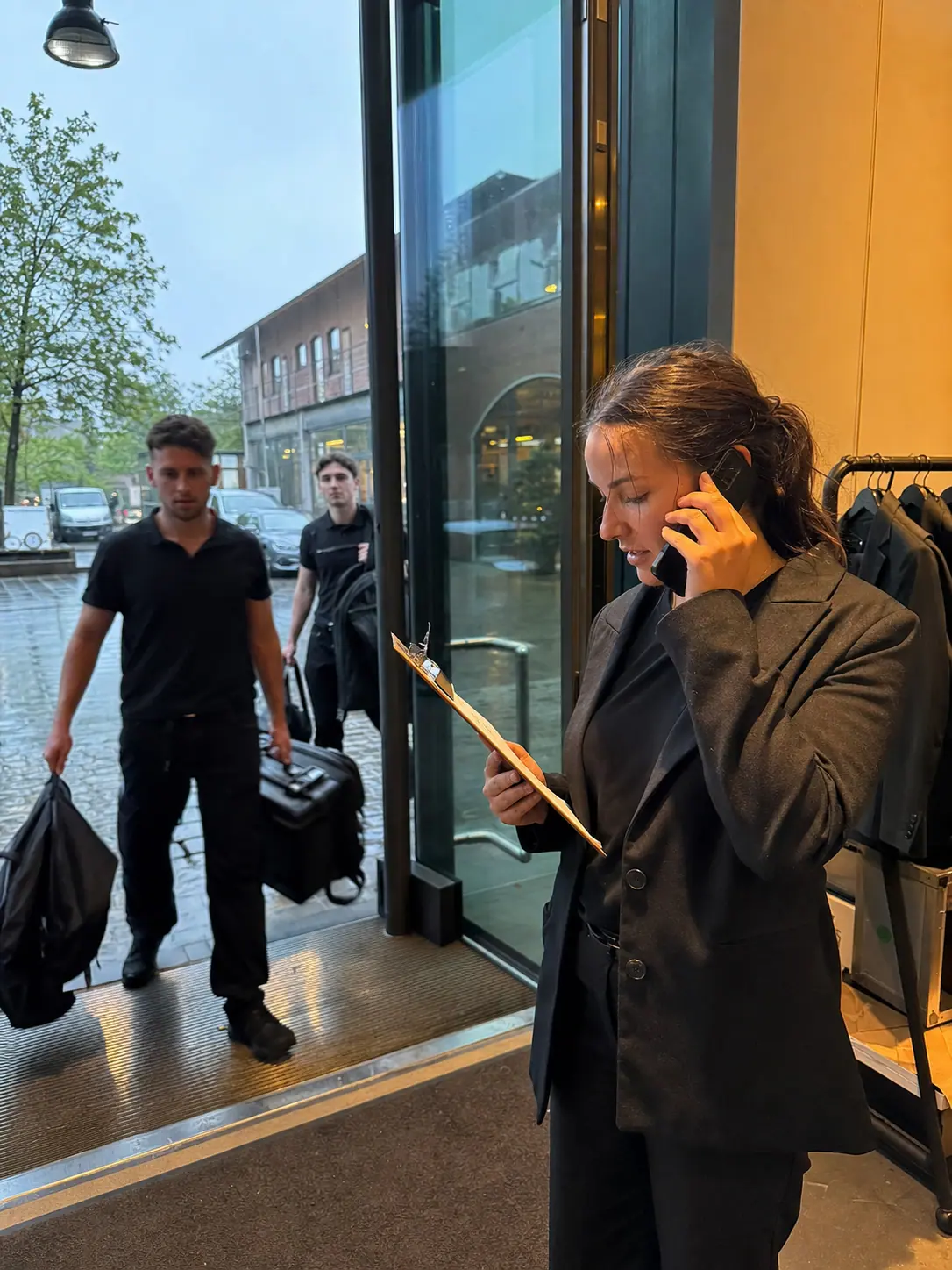 Illustrative image
COPYABLE WORKING TOOL
Copy the warehouse onboarding checklist
- Role, tasks and boundaries
- Prerequisites and evidence check
- Local risks and traffic route
- Host, instruction and supervision
- Equipment, access and protective gear
- Controlled first task
- Stop conditions, exceptions and handover
Frequently asked questions
- Is documented forklift training enough to start work?
- No. A relevant qualification does not replace local instruction for the machine, load, traffic plan, area and procedure. Keep evidence checking and site induction as two visible controls.
- Who owns warehouse onboarding?
- The business conducts local induction, instruction and relevant checks under its working-environment process. The agency can prepare the profile with the accepted brief and verify agreed prerequisites.
- Which task should a warehouse temp start with?
- Choose a controlled first task within the briefed role. Define the start, acceptance criteria, stop conditions and contact, then check understanding before more independent work.
Sources and methodology
This guide is editorial planning guidance built by breaking the staffing requirement into roles, tasks, workflows, handovers and decision points.
The official sources below support the guide's specific legal, safety or compliance information.
- Systematisk arbejdsmiljøarbejdeDanish Working Environment Authority · accessed 2026-08-20
- Faglig uddannelse i arbejdsmiljøDanish Working Environment Authority · accessed 2026-08-20